
Things We Already Knew About Nick Drake That Are Inescapable on The Making of Five Leaves Left
A Listicle, of sorts

Here’s a quote that should be framed and displayed on the wall of every label that puts out archival tidbits:
“I have always been of the opinion that any work of art must go through an evolutionary process which includes failure and mistakes, wrong turnings, despair, culling, and occasional elation.”
That’s Gabrielle Drake, sister of the late folk-rock icon Nick Drake, in a recent Rolling Stone interview. She continues: “The artist wants us to see or hear the result, not the painful process. This would have applied above all to Nick, the perfectionist. So, on his behalf, I have always eschewed the completist approach.”
Until now, that is. In recent years, researchers have uncovered several tapes that capture the soft-spoken Nick Drake brainstorming, musing on and refining his songs. One such reference tape, kept in a drawer by Drake’s friend, the folk singer/songwriter Beverley Martyn, had not been played in 50 years. Many of these recordings – austere character studies like “Three Hours” and meditations on impermanence like “Fruit Tree” – slowly evolved into the versions included on Drake’s Joe Boyd-produced debut Five Leaves Left, which was released in July 1969 – and, as the gorgeous booklet notes, was not an immediate hit.
When Gabrielle heard the discoveries, she told Rolling Stone she believed they could be organized into a kind of “origin story” for the iconic album, which had a year-long gestation. The Making of Five Leaves Left includes studio outtakes, tunes from Drake’s first-ever recording session at Sound Techniques studio, and versions of songs recorded in an undergrad dorm room at Caius College in Cambridge.
There are three discs of versions and revisions. The final disc is the original album, which was remastered for this compilation by John Wood (the engineer on Five Leaves Left) and Simon Heywood.
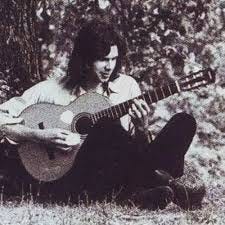
Spoiler alert: While there are notable historical artifacts, like the very first musical meeting between Drake and British jazz bassist Danny Thompson (who became a frequent Drake collaborator), The Making Of offers only a few unreleased originals or radical re-arrangements.
Instead, this collection amplifies aspects of Drake’s musicianship that made Five Leaves Left – and subsequent efforts Bryter Layter and Pink Moon – so enduringly significant. Saturated with pensive pauses and drifty suspended chords, Drake’s originals sometimes share traits with the first-person confessional approach to songwriting that was rising in the later 1960s – except they’re built on much more sophisticated chord sequences, and resist feelgood resolutions. Some move with the calm lilt of dinner jazz – but chase emotional complexities that defy/transcend the bubbly glibness of swing.
The performances on The Making Of trace the incremental early steps Drake took on the road to Five Leaves Left; they show process not product. As a result, they offer excellent perspective on what the singer, songwriter and guitarist brought to each session. They make clear that Drake was already a freakishly accomplished instrumentalist and tunesmith before he entered a recording studio for the first time.
And they reveal how Drake thought about not just the verses but the settings: At one point during work on “I Was Made to Love Magic,” he pauses to talk about the structure, then expresses the desire to “make this as celestial as possible.” It’s a telling type of Note To Self, a recognition that if the goal is to conjure some specific aura, it’s up to him to figure out how to do it.
Below, a (hopefully!) brief listicle of Things We Already Knew About Nick Drake That Are Inescapable on The Making of Five Leaves Left.
Drake wasn’t interested in peaceful easy guitar strumming. The folk singers of his era favored (or were limited to) basic busker-tested repetitive strumming patterns. Not Drake: He was an arpeggio machine who approached the task of accompanying his vocal as if creating an intricate mosaic, with single note melody phrases, carefully knitted chord patterns and active basslines all working in sync. And in real time, with no overdubbing. This spiderwebbed type of fingerpicking, audible on any early version of a tune like “Strange Face” (later titled “Cello Song”), is a Drake hallmark – the steadfast backdrop that, when you focus on it, becomes a dazzling marvel unto itself.
Drake had impeccable time. The several different interpretations of some Drake originals allow us to hear him refine his guitar accompaniment tactics from take to take. He clearly practiced these backdrops, and was fluent enough with them to shift aspects of the pattern to suit a different feel or tempo. On the fly. The pattern might change from one take (or one verse) to the next, but his time is invariably locked.
And Drake kept the toil of timekeeping hidden. Drake worked up his songs as solo-artist creations. He knew that he’d have to sing over whatever backdrop he created – one reason the word-forward folkies stuck to rudimentary rhythm guitar. Yet, crucially, he didn’t dumb down the accompaniments. He simply downplayed their challenges by singing as though dreaming, radiating a serene aura that envelops everything. It’s a rare confluence of energies – the guitar is all business, the voice floats – that recalls the similarly nuanced work of bossa nova pioneer Joao Gilberto.
Drake knew how to undersing a melody. Those who love the outsized melismatic gyrations of current pop singers may find Drake’s vocals somewhat plain, unshowy. This was his aesthetic. He wrote sloping, long-toned melody lines, then sang them in graceful slow motion. The trancelike “River Man” is one example among many here: Implying the blues, ruminating on unasked questions, Drake phrases with minimal ornamentation, reducing the theme to a ribbonlike essence that can slide right through even the strongest emotional armor.
Drake had an instrumentalist’s control of his voice. On one early take of “Strange Face,” which would later be retitled “Cello Song,” Drake can be heard singing, wordlessly, the theme that he wanted to eventually be played on cello. Though it is not directly on-mic and sounds a bit distant, this guide vocal is the precise line he envisioned, right down to the gestural push-pull tug of the phrasing. There’s evidence of this magnificent vocal control scattered across the unreleased takes – audible in Drake’s measured approach to vibrato, his swoopy ad-libs, his ability to simply hold an unwavering long-tone melody for dramatic effect. (Any rendition of “Three Hours” shows this last trait, to haunting effect.)
Drake understood understatement. If you’re an alert musician, the studio can be an invaluable learning environment – revealing what works and doesn’t about a take, expanding the options for alternate approaches. Drake was clearly paying attention: On early demo versions of some songs (“Man In a Shed” for instance), he experiments with blues-singer pitchbends and sometimes exaggerated approach tones to start a phrase. Not all of these reinforce the vibe or temperament of the compositions. By the time he returned for the later tracking sessions, Drake had filtered out some of those elaborations, creating performances made more resonant by their open, spacious atmospheres.
Drake had some familiarity with classical music. Gifted with an ear for unconventional harmony, Drake explored his own pathways between tension and release, consonance and dissonance. And he wrote songs derived from a foundational knowledge of blues, vaudeville and tango (!), frequently employing modal dronelike suspended chords that were virtually alien to acoustic folk-leaning music of the time. And that’s not all: Several of Drake’s originals (“Day Is Done”) follow the chordal cycles of Bach fugues or Chopin preludes; the early versions suggest that even before other musicians or string arrangers got involved, he had ideas about countrapuntal figures and counterlines. During one talkback exchange, he describes “Day Is Done” as a “string quartet song.” That’s what it became.
Drake understood the waltz. By the late 1960s, 4/4 time was the coin of the realm in popular music, with songs set in triple meter a distinct minority. That’s not the case on Five Leaves Left, which opens with a 6/8 rhapsody in rocking-chair tempo, “Time Has Told Me,” that’s followed by the slightly brighter waltz “River Man.” The album closes with a slow not-quite-jazz waltz, “Saturday Sun” built on the solemn triadic chords found in every church hymnal.

This is a brilliant analysis and breakdown of what we're hearing on this release. Thanks for sharing.
This is astonishingly perceptive even for Tom Moon! You really explored in the details of his work in extraordinary ways that I think illuminate not just Nick’s but the entire creative endeavor. Masterful.