Open Wide. Say OM.
Is the world finally ready for the Steve Albini-produced Pilgrimage, from 2009?

We sometimes talk about music as having outlived its moment.
An album hailed as an inescapable cultural marker upon arrival grows ossified, less resonant, “dated” over time. Even if it’s less than a decade old, such a work somehow becomes attached to a different era of human endeavor. It registers as a relic, sometimes because of the sounds or the themes, sometimes through no apparent fault of its own.
There are fewer instances of the opposite being true. But it does happen.
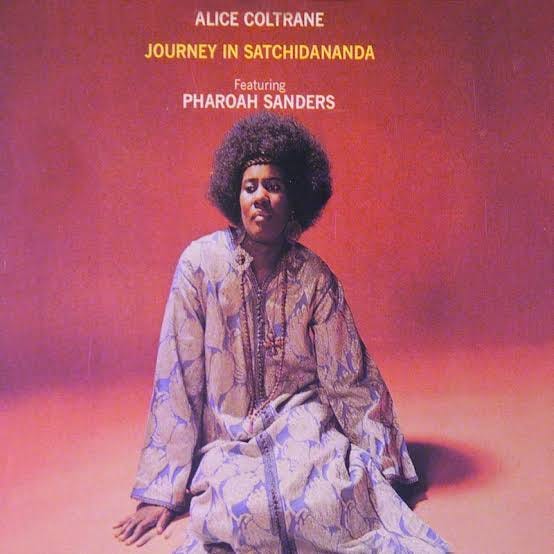
Example: Over the last several years, the subgenre of improvised music classified as “spiritual jazz” has experienced a thorough reappraisal and corresponding artistic reinvigoration. This might have been sparked by reissues of works by visionaries like Alice Coltrane and Pharoah Sanders, or Sanders’ 2021 collaboration with the electronic artist Floating Points, or it could be partly explained by the rise of Kamasi Washington or the much publicized vibe shift of Andre 3000. Doesn’t really matter: Through a mysterious constellation of sound and sensibility, right tones arriving at the right time, “spiritual jazz” returned to the conversation. It was missed.
Here at Echo Locator, we try to notice these little changes. We keep eyes peeled for new ones out on the far smog-obscured horizon. This trend-spotting activity, which of course encompasses radical developments as well as archival discoveries, is a part of what critics used to do. It’s notoriously unscientific; it involves scanning beyond the arts to the culture at large in search of clues about what might be driving the trendlets. Some would consider it armchair sociology. (For example, the mere fact that Twisted Sister is touring again does not signify a gnawing unmet hunger out there for ‘80s hair metal. Unless it does.)
So back in May, when the New York Times ran a terrific wide-ranging opinion essay by Katya Ungerman titled “We Are Sliding Back Into the Middle Ages,” we took notice and filed it away. The piece looked at assorted unexplained phenomena – including Tucker Carlson’s demon encounter – and connected it to other unexplained oddities including in UFO research, then connected that to renewed interest in religious orthodoxy among young people. As Ungerman writes: “Those phenomena are all signs that life feels, to many, increasingly charged with unseen forces.”
Music is, of course, ground zero for the shadowy, the abstract and the unseen. Every era has its sonic mediums and its Enyas, proferring communion with some version of the spirit realm. Their efforts don’t always age well either; yesterday’s vision quest is today’s spa soundtrack.
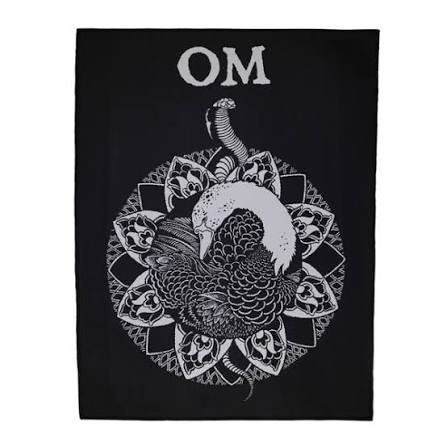
But: Here’s a deceptively intricate record that was relatively under-acknowledged when released in 2009, and has survived to provide some unexpected insight on our current surreal backslide into the Old Ways. It’s deeply challenging, and at times actually sounds as though it was created by two people imagining precisely what this post-science moment of rising mysticism might feel like. It was made by a drums/bass duo that evolved out of a band called Sleep and calls itself OM. This band is frequently tagged as “doom metal” and/or “stoner rock,” among other imprecise terms of art. The group’s third album Pilgrimage was recorded and engineered by the legendary Steve Albini at Electrical Audio in Chicago.
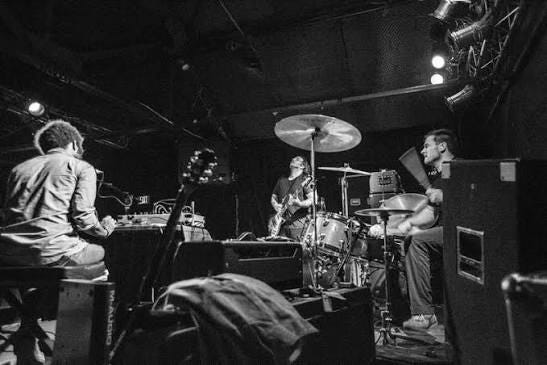
OM came up during a random search for Albini-assisted works that are not as well known as the famous records he made with Nirvana, the Pixies or the (still amazing!) Jesus Lizard. Not gonna lie: I cued up the title track, and was ready to flee by minute three. But something about Al Cisneros’ snaking bass figures, and the solemn incantations of his vocals, triggered curiosity: Where, exactly, is this fitful hooded processional headed? Are these somber liturgical tones beckoning from some sort of deep forest druid gathering? What’s up with the old-world religious imagery? Must one be a stoner or a true occultist to fully engage with the glories of OM?
Now, after several spins, it’s clear that the minimal information is exactly the point: There are no shortcuts to “understanding” this music intellectually, if it can be understood at all. To “get it,” you have to just take the ride — which, of course, is precisely the same “ask” made by Steve Reich’s Music for 18 Musicians and countless other modern compositions. Pilgrimage is optimization resistant. It’s an experience — of submerging, of giving over to the churn of the waves, of suspending those modern-life “how long will this take?” time imperatives.
The title track lumbers down its road for ten and a half minutes – and there’s a four-minute Reprise of it closing the album. The pace might be described as glacial. There is no melodic candy, no easily parsed narrative to grab onto, and just a few changes in density and dynamics.
The melody, if we can stretch the term that far, is deliberate in the extreme; it centers around two notes a half-step apart, and is delivered as a ritualistic mantra. The whole thing might crumble under its doomy conceptual weight were it not for the visceral, grandiose, time-chopping drama of drummer Chris Hakius. Who does not seem to care that the tempo is locked at a crawl. Hakius is alive to the duality of this music: He recognizes that the mental zone OM is instantiating is linked to the repetitions of chanting and the stasis of meditation, but that doesn’t stop him from punctuating the placidity with epic fills and crisp polyrhythms. (Hakius left the band, which continues to record and tour, after Pilgrimage.)
Those “events” within the music of Pilgrimage are central to its unusual magnetism. They shatter the ritual processional march of syllables and steps, disrupting the mystical reverence with some good old fashioned cathartic steam venting. It’s a mood, it’s a feeling that reflecting the inescapable conflicts inherent in being alive in 2026. In one corner, there’s the deep eyes-narrowed mistrust of the unknown and the “other.” In the far corner of the gaudily-lit cage, there’s the chants of longshot magical thinking for some sort of late-innings cosmic deliverance. Between them it’s all drones and murk, bass and drums.