
Many Forms of Prayer
On the remarkable Inspiracion, from Argentina in 1975

The history of recorded music is, at root, an account of how ideas travel.
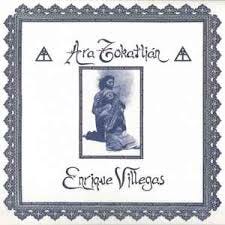
How an abstract notion that erupts in one place winds up blossoming – and mutating and evolving – in another. Or several.
Today’s example comes from 1975. That’s years after what we now classify as “spiritual jazz” – a searching, meditative approach to improvisation frequently built around static or droning harmony – reached cruising altitude in the United States, through recordings like John Coltrane’s foundational A Love Supreme (1965), Pharoah Sanders’ Karma (1969) and Alice Coltrane’s Journey in Satchidananda (1971).
In contrast to the frenetic proclamations and explorations of free improvisation, these introspective recordings can feel like a warm hug. Themes develop slowly. The rhythms are steady, settled, anchoring. Above all, there’s space within the sound field for things to rise and coalesce organically: Sanders, one of the masters of this realm, plays like he’s circling a sacred spot, labyrinth-style, deliberating. He tends the garden until the idea gathers steam and pushes him further, into gales and crests and torrents that become wild elaborations on the initial impulse.
The records spread the vibes and intentions of spiritual jazz beyond the U.S., to wherever records were sold. Among those paying attention were members of the inventive Argentinean progressive band Arco Iris. This is the esteemed, long-running band centered around the guitarist (and, subsequently, influential producer) Gustavo Santolalla, saxophonist Ara Tokatlian and bassist Guillermo Bordarampe. Arco Iris was clearly paying attention to a wide swath of creative music in the early ‘70s; its 1972 landmark Sudamérica o el Regreso a la Aurora opens with a series of pastorales and scenes inspired by (and yet in some ways more inventive than) the curtain-raising “overtures” of British prog-rock.
Sometime in 1974, Tokatlian, Bordarampe and the pianist Enrique Villegas – a classically trained musician who traveled widely in the ‘60s and recorded several titles in the U.S. – began exploring in trio format in Buenos Aires. The group made just one record, Inspiracion, in 1975. It was reissued, complete with a reproduction of its artful booklet, by the German label Altercat in 2923.
The trio behind Inspiracion employs ideas that are common in spiritual jazz – stately chordal washes, somber theme/variations statements. But these musicians are not copying anything – they’re pulling the “thread” of spiritual jazz, then weaving something else with it. And they’re showing what the devout quest can sound like when made by musicians who are versed in rock and jazz and fusion and the fierce folk music of Argentina and the simmering yearning of tango.
The compositions, written by Tokatlian, are not entirely drone affairs: They’re built around short chord sequences that carry traces of the age-old bolero and the songs of the legendary tango star Carlos Gardel – and, also, the idyllic songs written by Charles Lloyd in the late ‘60s and early ‘70s. These provide a slight but crucial organizing framework, and that’s all Villegas needs: The pianist piles lively, ear-stretching chord voicings one on top of another, creating waves of tension that resolve into gorgeous placid calm. He is not tiptoeing; his effusive playing saturates the chill-zone aura, extends and animates it.
There are two Tokatlian solo explorations, both “credited” to his spirit guide Dana. One (above) features multitracked tenor saxophone, showcasing Tokatlian’s beseeching tone; the other (below) is a multitracked flute improvisation that is almost disarmingly lyrical, a swirl of pure beauty.
Inspiracion returned to circulation in 2023, when interest in spiritual jazz spiked with the release of Outkast frontman Andre 3000’s New Blue Sun. Since then there’s been a torrent of deeply creative works by Shabaka Hutchings, Carlos Nino and artists from the International Anthem label, all of them aimed at the listener’s inner space.
Maybe the return of the lusterous Inspiracion is a cosmic coincidence. I don’t think so. Though mostly lost for decades, this record is part of the history of spiritual jazz – it shows the way ideas bounced from place to place in endless reverberation, and how those ideas could be transformed into further, deeper, more unlikely sounds. More than some footnote from a faraway place, Inspiracion is (another) reminder that inspiration is a circuit.

We had Ara Tokatlian live on the show. He took Arco Iris to America and released the album Peace Pipes on the Audion label. It was much more in a New Age direction but I still liked it. His spiritual advisor, Danais, was still with him until she died several years ago. She was much older. When I mentioned Arco Iris to Gustavo Santaolalla he was pretty disdainful, mainly because of Danais. To quote: "Well the group really became almost like a cult, and it has lots of really negative things like any cult has. I mean I don't want to get in to it but really heavy, pretty horrendous stuff for me you know. Things that I associated with, you know, with a fascist mentality so, I really heavily disagree with that and they're so stuck in the same way of thinking." I definitely got the new age mysticism vibe but they all seemed extremely sweet tome. Gustavo was only a teenager at time.