
Listing
Yet another first draft hot take on the Times' 30 Greatest Living American Songwriters

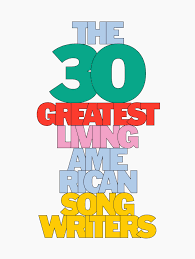
It’s a hot mess.
Here’s how to tell: When members of the New York Times culture desk got together for podcasting (or would that be “marketing”?) purposes to discuss their rather elaborate 30 Greatest Living American Songwriters project, some of them gushed about the alchemic mysteries of hitmaking.
Some talked about artists they, personally, like or don’t like. (Hint: huge red flag!)
Some talked about “cultural impact,” as though they possess unique sensors for divining such a squishy thing in our polarized world.
What they didn’t talk about: Music.
How they didn’t talk about it: As critics.
[Don’t worry. Today is not the day for (yet another) repeat of the sermon about the timeless – and ideally self-evident – elements of songcraft, and where they’re missing and where they shine brightest in contemporary music.]
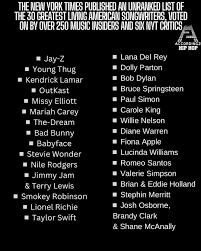
What else they didn’t talk about: The criteria. At first it looks like the process was almost scientific. The Times sought out songwriter nominations from 250 music “experts” – full disclosure: I’m not terribly butt-hurt to have missed the cut.
Then the Times, which it must be said is one of the last newspapers that makes any effort to publish arts criticism on a regular basis, poured the more than 700 nominated talents into some super-secret algorithmic sausage grinder and turned over the resulting rankings to a team of six “Times-affiliated critics” — each of whom, the Times says, “has written about music for decades.” Translation: You music lovers are in good hands. These are the experts: Wesley Morris, Jon Caramanica, Joe Coscarelli, Lindsay Zoladz, Jody Rosen and Danyel Smith.
As Rick Beato notes in this funny/sad postscript to his first reaction video, this panel includes thinkers from all the best schools – Harvard, Princeton etc. Yet none have had significant formal training in music. Does that matter? Should it?
So maybe Beato is a bit over the top. But his point is valid. In order to be something useful for humans, or at the least something other than pure ragebait, a critical culling needs to communicate clearly its filters and apply them in the same ways to everyone under consideration.
This list does not.
Diane Warren, a professional hitmaker who has been enormously successful across decades with a formulaic recipe for audio treacle that works over whatever beat is in vogue, is a Greatest Living Songwriter? Is that on the basis of Art or Innovation or Market Share? Unclear!
(Should Market Share be a filter? Let’s ask Lucinda Williams, a Greatest whose welcome inclusion reflects entirely different math; her total sales are a Diane Warren rounding error.) And what’s up with the fact that Warren is one of the very few on the list who is not also a performer?
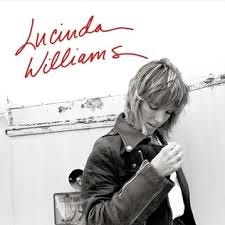
Is that a slide in the canonical criteria, or is there no criteria beyond what Wesley Morris Likes or Dislikes?
And speaking of Warren, can we talk for a minute about melody? (OK, you’re right, she doesn’t belong in that conversation….).
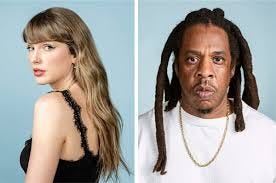
I get why Beyonce is not here; lots of her songs reflect the work of committees. But they’re songs, with easily remembered hooks. Jay-Z is here, curiously, and it’s likely the 6 experts can’t sing the melodic hooks from three different Jay-Z songs — and if they can, it’s because those hooks were written by others. Jay-Z is a rap artist, and certainly in the Greatness discussion there, and a canny businessman and influential public figure. What he does as an artist is not songwriting as Richard Rodgers or Woody Guthrie or Taylor Swift (on the list) or Billie Eilish (sigh, not on list!) understand it. Or as people who teach songwriting understand it. Does that matter? Should it?
In one of the several explanations Times cultural critic Morris has offered for the choices, he suggests that with this list the Times is acknowledging that the very definition of song is changing, and this list is on the leading edge of representing a newly coalescing understanding in that regard.
So….does that mean the definition of a song no longer encompasses melodic information? Or something as quaint as a singable melody? Let’s ask Paul Simon, one of the 30, who’s been known to agonize at length over the shapes and contours of his themes. Before the words. Beyond the words. Sending the words airborne.
His art lies in the ways those melodies engage with, animate and extend the resonance of the words. Which is a related but different art than building a vibey jam or a platform for polyrhythmic rapping.
Let’s just skip right over harmony, because, hey, we all know that Bad Bunny could drop a hit using John Coltrane’s Giant Steps substitutions if he wanted to. The more limited harmonic palette, the one-chord approach, suits him – and more importantly suits his audience. Besides, these restrictions are the mother of great art. Also: There’s joy in repetition. (Bad Bunny didn’t write that one, tho….).
Just one more metric, among many, to poke (or lament its absence): Output. There’s lots to love about the last Bad Bunny record, and less to love on the releases before it. His inclusion (and the perhaps corresponding exclusion of classic-rock hitmakers like Billy Joel with decades-long discographies) here feels like a triple-axel pretzel knot by the Cabal of Six to champion recency over longer-term contributions.
Which is to say: At times, this list is trying to play, or game, the futures market: Bad Bunny may one day become insanely prolific, but his catalog to this point seems light if the paradigm is “greatest,” while also being thin on what a critic might cite as innovation. He’s yet to deliver songs that evolve in musically meaningful ways from start to finish, or songs that have sophisticated chord changes or dramatic interlude passages like those in, say, “Born To Run.” Or existential narrative subtlety of the sort found in “Piano Man.” Then again, Mariah Carey’s catalog is fairly light on those too. She’s here why, exactly? To make Lionel Richie look presidential?
**
Criticism is (*was*?) service.
It’s an act of advocacy for works created by the thought leaders and innovators in a discipline who, by talent and sheer will, are dragging art a step or two forward. That’s a primary function of a critic. Songwriters catch bursts of emotion and random thunderclaps of inspiration, and then organize those bursts using objectively measurable techniques. The role of the critic is (was?) to understand the tools in use, and the basic rules of the art — everyone in music starts with the same 12 notes of the tempered scale, with creative exceptions like the microtone-slinging Angine de Poitrine, above). And then the critic’s job is to explore why the specific usage by Artist A is measurably more sophisticated than that of Artist B.
This list and its smug accompanying essays do not do that.
The critical list, like this one, is an attempt to drop bread crumbs for future generations, to point those who are curious in the direction of groundbreaking work.
This list does not always do that.
Instead, it reads like a conference room compromise negotiation about personal favorites that uses the acknowledged world-class songwriters (Bob Dylan and Willie Nelson, both thankfully present here) as a kind of credibility screen or sheild. In the podcast discussions, those titans are discussed as any sane person’s “gotta haves,” proof of this as a sober endeavor. The inclusion of Young Thug is something else. Still unexplained, unfortunately.
**
There’s been lots of griping about omissions. At one point deep in the shouting comments on the Times site, the eyes glazed over and I was like: Why are we getting all worked up over petty personal taste when we could be immersed in the shadowy realms conjured by songwriters like Joe Henry, Tom Waits, or Alejandro Escovedo?
Regardless of who the experts overlooked, there’s an even more glaring/telling omission from this mess: Jon Pareles. Since 1988, he has been the Times’ primary popular music critic, writing with precision on hip-hop phenoms and blues iconoclasts, African pop stars and jazz renegades. His openminded work shows it is possible to do criticism while educating readers, providing context. While keeping his personal likes and dislikes out of the copy.
It’s impossible to know if the list would have been different with Pareles’ involvement. One thing is for sure: He would have brought the ears of a musician to the discussions. Probably helped clarify some basic concepts that were evidently murky to some participants. Like: What Is A Song. Why Its Building Blocks Matter. And Why Popularity Is a Nonsense Metric.
In July 2025, the Times culture editor Sia Michel announced, via memo, that Pareles was among several veteran critics being reassigned. Describing arts coverage as being at an “inflection point,” Michel wrote “It is important to bring different perspectives to core disciplines as we help our coverage expand beyond the traditional review.” The Times, Michel wrote, needed to meet the moment, to appeal to a “growing national and international audience.”
Presumably this expensive and gargantuan editorial effort around the 30 Greatest Living American Songwriters is exactly the type of thing Michel envisioned. They might still be high-fiving in celebration over there at Times HQ – so happy they can hardly count all the clicks! Proof of engagement! That is the illusory euphoria of a downbound train, though. Because this expensive mess of listmaking is one extra large nail in the coffin of criticism.

That is a wonderful, thoughtful, reasonable but provocative argument, Tom. Of all the reactions I've read to the list, yours is the first to address the process rather than the result. And I will always stand by and champion any of my sistren or brethren who speak up in defense of criticism. Clickbait and listicles like this are the end product of poptimism. The incapability to judge art in the context of its totality rather than its currency is a distinguishing feature of so many writers masquerading as critics, and it has been for a while now. It is of course overdue and wonderful that the traditional canon is being reevaluated by new generations in so many fields of culture and art, but acknowledging the present has to be done in balance with the past. It's fine to reject the received wisdom of only trusting oldwhiteguys to be the leaders in any given field, but that's just the starting point. "Greatest" is a terrible blanket term when you are judging and ranking artists whose purpose, process and achievements are virtually unrelated. (Incidentally, the NYT Top 100 NY Restaurants list suffers from the same apples/oranges ridiculousness.) Songwriters should only be compared within genres, just as restaurants should. Melody, of course, is not the only element of songwriting that matters, but artists who devote their lives to crafting them should not be judged alongside artists whose prime focus is lyrics. Anyway, thank you for this piece and bravo.
Jon Pareles wouldn’t have overlooked Randy Newman.