
In the Trenches with the Colonel and the King
Peter Guralnick's latest indispensable addition to Presleyana


One way to understand how dramatically the music business has changed since 1950 is to seek out the published documents – coverage in the newspapers and the (surprisingly useful!) teen magazines as well as the charts, news stories and profiles in the then-multiple weekly trade magazines, which tracked not only the progress of hit records but the maneuvers of label heads, zany novelty artists and hucksters of every stripe and imagination.
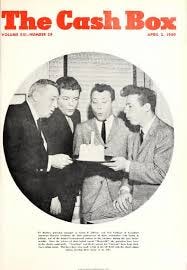
Another way is to eavesdrop when those people, participants in the rapid evolution of the business, communicated with each other. Which they did constantly, by phone and through letters. Among the many prolific letter-writers of yore was Col. Tom Parker, Elvis Presley’s manager. Famously candid, savagely witty and a hardball player when necessary, Parker was the rare artist advocate who understood the entire myth-making process of stardom – and savored his role in it.
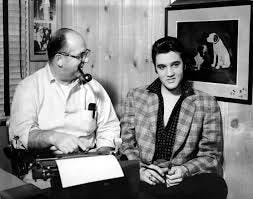
As is clear from the letters reproduced -- and crisply contextualized – in the fascinating and indispensible latest work by Peter Guralnick titled The Colonel and the King, Parker used written communication in common-practice ways, to clarify mundane details. But along the way, he would go beyond that, to gently remind his recipients of the mythic nature of his client’s talent. And buff up his own prowess as kingmaker.
Or peacemaker. On June 8, 1956, after Presley performed some suggestive moves in his second appearance on the Milton Berle show, Harry Kalcheim of the William Morris agency wrote Parker to complain. Parker starts his response by reminding Kalcheim that the media is still trying to figure Elvis Presley out. Then Parker suggests that he’s not running away from controversy: “I have always remembered, and practiced the old saying: “One never wins anything when when one gives up,” and I’m not a quitter. As long as the LIGHT BEAMS [his capitalization], I will turn it on!”
So many ways to love this little peek behind the curtain. It is honest. It is collegial, not confrontational. There’s no invocation of numbers or ratings or algorithms or questionable data from either side – instead Parker shares a stick-to-it aphorism, in a spirit of folksy camaraderie.
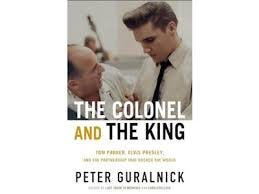
Before Guralnick shares these and many other letters, he’s fully built out the wily yarn-spinning myth-perpetuating larger-than-life CHARACTER [caps mine] of the Colonel. Guralnick’s book is split into two large chunks. Book One, titled “How Much Does It Cost If It’s Free: The Improbable Story of Colonel Tom Parker,” chronicles Parker’s life in narrative detail. It tells how the future Colonel – born Andreas Conelis van Kuijk (“Dries” for short) in Breda, Holland – acquired practical skills working on his uncle’s small traveling circus. How he traveled to the United States as a stowaway on a Holland America line ship, then got hired on traveling shows, eventually working with Eddy Arnold and Ernest Tubb.
Drawing on research from his previous books on Presley as well as materials from the Presley archive, Guralnick captures the (abiding, complicated) relationship between the Colonel and his lone client from many angles. The narrative hits the same nuanced, empathetic tone Guralnick developed for previous works on Presley, Careless Love and Last Train to Memphis, but this portrait is bolstered, in some significant ways, by the correspondence in Book Two. The letters underscore Parker’s commitment to his star and Presley’s corresponding loyalty to his manager, while showing how the manager’s shrewd read of small ground-game situations helped the King ascend to a level of unfathomable popularity, and stay there.
Arguably the most important writing Guralnick did for The Colonel and the King can be found in the contextual set-ups and descriptions in Book Two. Many of the events are familiar markers in Presley’s career; it’s incredible to read Guralnick’s backstories and then Parker’s “insider” takes, as shared in letter form.

Consider what happens after Parker gets more anxious correspondence from William Morris about Presley’s upcoming first appearance on the Ed Sullivan show. There’s worry about salacious or unpredictable behavior from the star. Parker acknowledges it, but immediately returns to all-caps to draw a clear boundary: “I WILL DO WHATEVER IS FAIR BUT MUST INSIST ON COMPLETE CONTROL OF PRESENTATION AS TO SONGS.”
He retained that control. File under: How It’s Done.
Parker understood the power of charm; he calibrates his snark level according to what his missive needs to accomplish. He opens a 1957 exchange with Bill Bullock at RCA Records by expressing thanks and approval of a cover-art proof, then pivots immediately to wondering why he’s not seeing big ads tied to the release of what he calls Presley’s “SACRED EP.” “Seems a little odd that the way ELVIS is selling records…..there wasn’t an ad in the trade papers – Billboard, Cash Box – announcing this tremendous new medium for ELVIS when everyone else has a big ad in the trades this week.”
The Colonel doesn’t stop there: “I would appreciate some comment from the “Buck-Passing” Department on this.”
And there’s more. Still being congenial, Parker observes that RCA is laying off employees; “I have a feeling that some of the extra work is being piled on the Managers of the Artists – me being one of them. If this is not so, you will at least get a good laugh out of it.”
New paragraph: “I have no objection to your reading this letter at the next “Executive Buck-Passing” meeting.”
There it is, the secret sauce to the Colonel’s kingmaking: He is having fun.
This letter was sent before Presley ascended to mega-stardom, before Parker was revered as a svengali, when he was closer to scrounging on the circus circuit than mansion living. The executives could crush his artist’s career, but Parker doesn’t appear to care; he takes delight in needling those in power, and does it in a wry way that encourages them to laugh along with his (astute) reading of the chessboard. As he follows the individual moves and notes RCA’s lapses, there’s a wink happening between the lines, an acknowledgement (likely shared by some of his targets) of the dazzling ludicrous machinery of pop, what Parker liked to call the “Wonderful World of Show Business.”
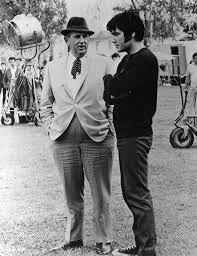
Now maybe this avuncular freewheeling approach still prevails in the climate-controlled conference rooms where today’s power players do their thing. Hope so. Because reading these volleys got me thinking about how attitudes within the music business have changed, how the friendly jab at the (still quite active) Buck-Passing Department has evolved into battles and extended beefs and toxic social-media wars. How reliance on data has bigfooted instinct. It’s become a bloodless business in some ways; notions of civility and comportment and basic human friendliness have dissolved as communication has evolved to become instantaneous. If show business ever was a wonderful world, it was made that way by people like Colonel Tom Parker, who relished all aspects of it – the spark and the flameout, the magnetic pull of stardom and all the preposterous absurdities that ride along behind it.

Loving forward to reading this as both an Elvis fan and a fan of Peter Guralnick.