

Today we are shouting out to the generalists of music.
People who developed as musicians by taking gigs regardless of the type of music, who learned multiple instruments to expand their horizons and/or increase their opportunities. People like the guitarist and bassist Phil Upchurch, who died a year ago at age 84. Here, from 1961, is his first taste of success. A kicky little dance instrumental.
The path of the generalist, walked by countless players throughout modern music history, is exceedingly difficult now. And music is poorer for it.
As in many fields, music has become a province of specialists, instrumentalists who have refined an often deep understanding of a single subgenre of music – and, in parallel, developed the the precise technical tools to communicate effectively within that chosen musical style. (Just don’t ask them to play “Misty” for you.)
Such focus is necessary, given the level of competition for any professional gig in music. It’s created a cadre of astonishingly brilliant, technically adept players and composers – whose work involves creating projects that require other, equally specialized musicians. In the endlessly microslivered pantheon of music, knowing one’s lane and staying in it is practically a requirement. A business reality.
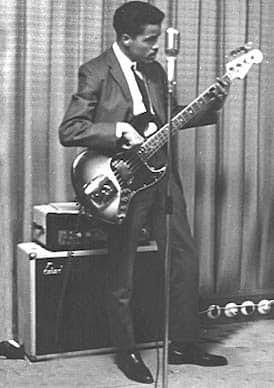
Upchurch came up in Chicago. He was self taught, and worked in as many musical contexts as he could – vocal harmony groups, jazz combos, blues, and so on. He toured with Oscar Brown Jr., the socially attuned jazz vocalist, and through a pivotal 1965 tour with the Staple Singers, Upchurch established the template for the burbling hyperactive bass foundation that became integral to the gospel group’s many later hits.
The live Freedom Highway, above, pairs nicely with our little public-service reminder: Today is election day! Please let your voice be heard!
Upchurch’s ability to play both electric guitar (the instrument he’s most known for) and electric bass (arguably the instrument where he was most influential) led to steady employment as part of house rhythm sections at Chess/Cadet records – when he was still a teenager. There, he recorded with Howlin’ Wolf, Muddy Waters (he’s on Electric Mud!), Little Milton and others.
Later in the ‘60s, when the label expanded into R&B, he became part of Charles Stepney’s progressive soul-rock band The Rotary Connection, and contributed to the solo works of vocalist Minnie Ripperton. And Upchurch was part of the team that Curtis Mayfield assembled for the enormously successful soundtracks to Superfly, Let’s Do It Again, Sparkle and Claudine.
During all of that, Phil Upchurch was also doing this – touring and recording with the jazz organists Jimmy Smith, Jack McDuff and Jimmy McGriff. If you listen to only one of the links on offer here, let it be this monstrous extended groove exploration from 1970, the title track from McGriff’s A Thing To Come By. There was no bass player credited on the initial release, but it’s clearly electric bass, not pedal bass from the organ. And: Given the intensity level and the crisp clarity of the lines, it’s undoubtably Upchurch. Check the way he keeps upping the intensity here.
And while he was mixing it up with the titans of jazz organ, Upchurch was also making records of his own. Some of them explore jazz contours, others bring an improvisational sensibility to R&B grooves – his 1970 gem The Way I Feel features Donny Hathaway, future star in the category (and another notable generalist), on piano.
A look at Upchurch’s discography in the 1970s suggests that he was in serious demand – on both guitar and bass, and for all kinds of projects. He’s part of the band that made George Benson’s “Breezin’” so inviting – and so sticky. Upchurch was also integral to Grover Washington Jr.’s landmark Mister Magic, and Hathaway’s classic albums – and even appears on Michael Jackson’s Off The Wall. Concurrently he recorded on several of Woody Herman’s ill-fated soul-tinged big band efforts, was part of the Soulful Strings group that recorded MOR covers of Gamble and Huff and many others, and helped Stan Getz with an album of Bacharach and David hits.
**
It is easy to listen to Phil Upchurch and reach some obvious conclusions: Here’s a tremendous musician who, in addition to playing tastefully, had an unerring gift for finding the butter notes and stoking the grooves that sound like they just emerged, hissing grease, from the deep fryer.
That’s there. And yet this skill is just one facet of his art. What makes Upchurch such an important (and yes, still under-recognized) figure in this moment of hyper-specialization is his ability to enhance situations that were like home cooking to him, and situations that were not. He brought a deep skillset to the (many) record dates, but didn’t impose his trademark special “thing” on every project.
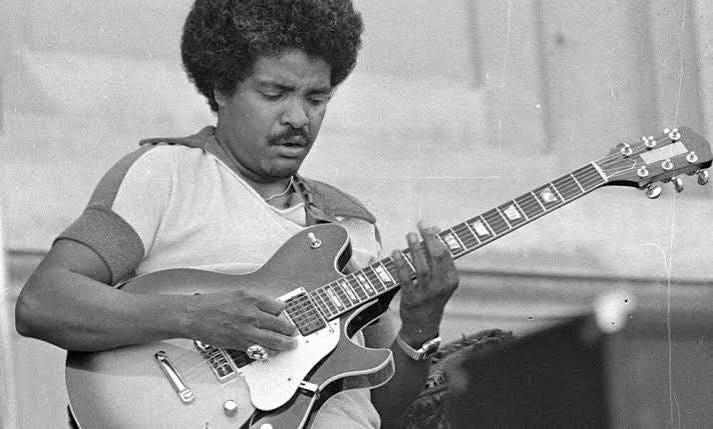
Instead, Upchurch got really good at understanding what the music needed, and went about providing exactly that. Like many generalists, he brought an abundance of sensitivity and flexibility to the act of music-making – qualities that are audible across his discography, on the hits and the misses. He applied the lessons he’d learned from one genre to the records he made in other genres; he ported knowledge he picked up from the blues greats – like the tension-producing tricks for stretching the space between backbeats – into soul projects and smooth jazz projects and on and on. Those projects have a certain sparkle as a result.
In a profound sense, Upchurch was what Malcolm Gladwell would recognize as a “connector” – someone who, in the course of doing the work, is able to link ideas from different eras or disciplines, and thus amplify the resonance of the work. Where the ninja instrumentalist dominates a lane, the generalist traverses worlds, and seeks interaction between worlds. Not incidentally, Upchurch did the same thing between instruments: His concept for the electric bass draws on his experience as a guitarist, and vice-versa.
The argument for specialization says that it’s easier to maximize opportunities by focusing all energy on a subset of the market. The argument for generalization also has some employment upsides, but really it’s about creativity and the ways ideas can cross-fertilize and multiply. Phil Upchurch was revered because he brought a kind of X-factor wisdom that came from experience playing blues, and jazz, and soul-jazz, and gospel, and R&B, and rock and on and on. He could be the glue, and involve others in the glue-making, on any track, in any style, on any instrument.
And: He’s not some outlier. There were a zillion generalists walking the earth during some of the most creative periods in popular music history. And now what he did seems rare, almost exotic, a thing to come by. It shouldn’t be.

Really enjoyed the read!
What a pocket and what a read! The reader’s pocket. Yessir Tom dropping gems always thanks for the education ❤️