
Datestamp Blues
Or How I Nearly Missed a Great, Historically Relevant Live Album from Dr. John

Call it Datestamp bias: The act of deciding against spending time with a particular album or work of art based on the year or era it was made.
Happens constantly. Given the endless buffet of artistic expression available at a click, being choosy is both useful and necessary. Let’s be real: How much time is needed with those country records Dean Martin made in the late ‘60s-early ‘70s, the ones that positioned him as a velvet cowboy crooner via covers of Glen Campbell’s “Gentle on My Mind” and all the rest?
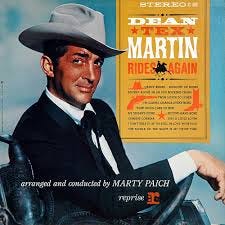
We all know the answer to that one, don’t we Tex? As one of our great philosophers noted, “When you’re dead you’re done.” Choose wisely!
This critical filtering explains why, back in November, I sailed right past Live at the Village Gate, which captures New Orleans legend Dr. John (Mac Rebbennack) performing with his New York band in March 1988. I’d seen that band several times during the late ‘80s, appreciated the sparkly sass from the A-list horn section – Ronnie Cuber (baritone sax), Lou Marini (tenor sax), Lew Soloff (trumpet) – and the loping swing provided by bassist Wilbur Bascomb.
Side-swerve to underscore the endlessness of our current buffet: Here’s a taste of Bascomb’s 1977 solo project And Future Dreams, a strong contender for future Echo Locator discussion:
But Dr. John’s New York period – during which did a bunch of cowriting with Doc Pomus and performed regularly at places like the Village Gate and Tramps – didn’t approach the psychedelic irreverence of his visionary work on Atlantic Records or the catalytic fire of his later bands in the ‘90s, which featured mostly New Orleans musicians simultaneously celebrating and breathing new fire into the city’s R&B legacy.
So I kept moving. Looking back, it was some snap-decision snobbism. I didn’t spin the Village Gate record, which was released as part of Record Store Day in a lavish colored vinyl edition by the detail-oriented Omnivore Recordings, because I thought I knew what to expect.
And I was partly right: This is Dr. John bringing professional show-biz sheen to the Night Tripper hoodoo business. The band doesn’t stretch the backbeats like the New Orleans rhythm sections do, but everything is well executed, aimed at getting people moving. The basics are beyond covered; everyone on this stage plays with authority.
And the focus is on whatever aspect of the groove the wily raconteur Dr. John wants to highlight. On the mission statement “Keep That Music Simple,” it’s the elemental lock of drums, bass and percussion that starts hot and stays that way. On Champion Jack Dupree’s “One Dirty Woman,” it’s the pianist’s personal map of connections between early-blues piano pioneers like Jimmy Yancey and Memphis Slim and the slippery elaborations that came, decades later, through the work of Professor Longhair. On the closer “Mardi Gras Day,” which lasts nearly 17 minutes, it’s the unique propulsive repetition of the second-line parade rhythm. Which, it must be said, sounds like heaven’s own welcome reception in a nightclub.
Even if 1988 wasn’t a high-water mark in the career of Dr. John, it was a pretty great time in the long history of live music performance: The guys who toured with established names like Dr. John were inevitably exposed to the crowd-galvanizing techniques of the giants active at the time – a snobby shortlist might include Prince, the Grateful Dead, Bruce Springsteen and the E Street Band, and the Police. Right below that tier, fame-wise, there were many many artists out there melting minds – Jeff Beck, Frank Zappa, Weather Report. To be active in live music during this era was to encounter a wild spectrum of instrumental greatness. Nightly.
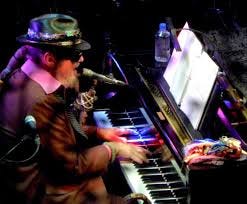
That type of inspiration is a circuit, and you can hear evidence of it on the Village Gate set, particularly in the guitar journeys of Joe Caro. Then based in New York, Caro fit the description of a gun-for-hire; he’s on records by Carly Simon, Irene Cara, Gato Barbieri, Randy Brecker and others. In Dr. John’s band Caro serves as instant sparkplug. Check the four damn-near perfect choruses of “Let The Good Times Roll” that begin around 2:50: Caro weaves Chuck Berry repetitions and B.B. King pitchbends and hotwired, arena-enveloping Eddie Van Halen sustained tones into a torrid, pulse-quickening ride.
Sure, there are some cliches from the Ye Olde Rock Guitar Trickbag on this solo, and several others from this uniformly engaging show. Likewise, Soloff does his high-register catcalling thing with aplomb. But like the abovementioned rock and jazz wizards and the incandescent Dr. John himself, Caro understands that a cliché is just a springboard. When rendered with this type of drive, spirit and technical command, it becomes a different mojo — transforming the room while transcending the datestamp.

As always, superb tip, Tom! Not to be missed for sure. And hell yeah, that guitar guy Caro is awesome. His lead on"Mess Around" slays (and his rhythm work is exceptional).
This LP is a treasure trove of groove, soul and stunning musicianship.
Done in 1988, same year I shared a cab ride one afternoon with Mac and Lone Star Cafe owner Mort Cooperman, stuffed into the back seat of a sedan. And the good Doctor regaled us with his tale of taking his teenage daughter to a heavy metal show.
Shit! I coulda seen this show! (Kicks self.)